




EASA has issued an updated airworthiness directive for specified Rolls-Royce Trent 1000 engines, requiring revised inspection instructions for high-pressure turbine blades. AD 2026-0203 was issued on October 27, 2026 and becomes effective on November 10.
The directive updates an existing inspection programme rather than announcing a grounding of the Boeing 787 fleet. Its applicability depends on the engine model and serial number, with the inspection requirements addressing a defined turbine-blade part.
Which engines and blades are covered?
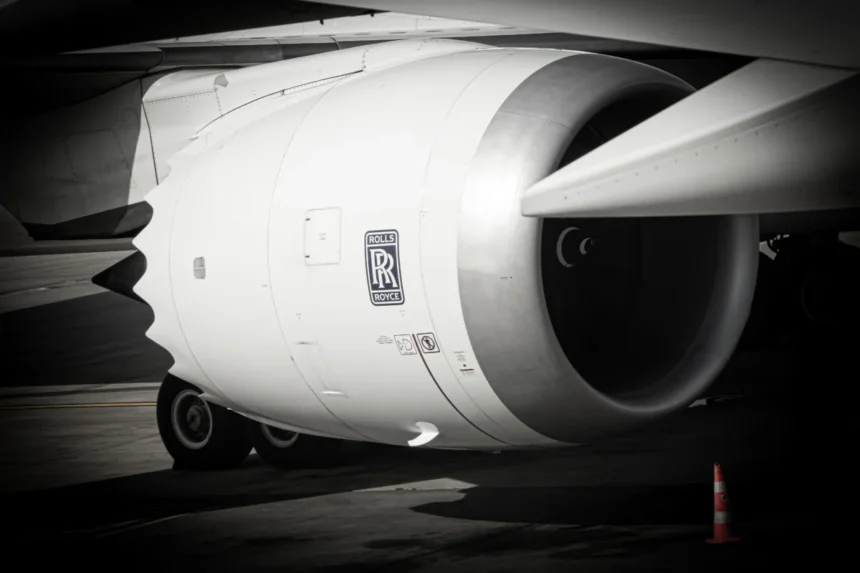
The six-page EASA directive applies to Trent 1000-AE3, -CE3, -D3, -G3, -H3, -J3, -K3, -L3, -M3, -N3, -P3, -Q3 and -R3 engines with engine serial numbers below 11603. EASA says these engines are known to be installed on Boeing 787 aircraft, although installation is not limited to that aircraft type.
The affected high-pressure turbine blades have part number KH64485, in the configuration identified as post-modification/service bulletin 72-J550. The applicability should not be extended to every Trent 1000 engine or every aircraft operated by an airline that uses the type.
What has changed?
EASA says Rolls-Royce has revised its inspection instructions to focus on findings at the blade’s leading edge and convex surface. The new directive partially retains AD 2025-0206R1, dated December 18, 2025, while requiring the updated instructions in Rolls-Royce Alert Non-Modification Service Bulletin TRENT 1000 72-AK316 Revision 7, dated September 9, 2026.
The directive retains on-wing borescope inspections at intervals no greater than 50 flight cycles, alongside finding-dependent follow-up inspections and corrective actions. Some specified findings require the engine to be removed from service before its next flight. Its inspection threshold table uses engine cycles referenced to October 6, 2025; November 10, 2026 is not a new starting point for all compliance calculations.
Two specified engine modifications, under service bulletins 72-K335 or 72-L088, can end the recurring inspections required by this directive for the modified engine. Maintenance teams must use the full directive and applicable approved instructions to establish each engine’s obligations.
Why EASA is requiring the inspections
According to EASA, operating experience showed that the affected blades can deteriorate despite the existing maintenance inspections and limits. Undetected deterioration could result in blade failure, an engine shutting down in flight and reduced aircraft control. This is the unsafe condition the directive seeks to prevent; it is not a finding about the cause of a particular accident.
The AD documents a regulatory sequence stretching back to 2019. A 2024 directive changed the inspection requirements and introduced convex-surface checks. Further changes in 2025 reduced inspection compliance times, added follow-up actions for cracked blades and provided an optional modification route to end repetitive inspections. The October 2026 directive adopts the latest revised inspection instructions.
What passengers should take from the notice
The document does not identify cancelled flights or announce that all 787s must stop operating. An aircraft type on a booking is not enough to establish whether a particular engine and blade configuration falls within the requirements. Passengers should check their airline’s current flight information for any actual schedule change.
EASA’s current safety-publication index lists the October 27 issue and November 10 effective date. This report is based on that record and the complete directive; Flyzeu has not independently accessed the manufacturer’s underlying maintenance bulletin or aircraft maintenance manual.
More reporting: Flyzeu safety and investigation coverage.