



Six people, including a child, died when a Piper PA-46 crashed in the Town of Dellona near Wisconsin Dells on Tuesday night, October 13, authorities said. Federal investigators are examining the flight after the pilot reported icing and asked to descend.
The cause remains undetermined. The pilot’s report is an early investigative detail, not a finding that ice caused the crash.
What authorities have established
The Sauk County Sheriff’s Office said dispatchers received reports of an aircraft down shortly after 9:30 p.m. local time. Responders found all six occupants dead in a wooded area. The victims were five adults and one child, according to the sheriff’s statements reported by ABC News.
The aircraft was returning from Kenosha to Menomonie, Wisconsin. Authorities reported no injuries to people on the ground and no damage to structures. The FAA identified the aircraft as a Piper PA-46; the NTSB is leading the investigation.
Identification update — October 16, 2026: The Sauk County Sheriff’s Office released the victims’ names on October 15, according to WMTV reporting carried by WEAU. Those identified were Ronald R. Riek, 63, of Woodville; Tyler J. Harvey, 36, of Cadott; Mary K. Brion, 67, of Nelson; Amanda M. Haremza, 45, and Rylan Haremza, 13, both of Altoona; and Kayla C. Turpin, 39, of Eau Claire.
Associated Press reporting carried by WTMJ identifies Riek as the pilot. The identification update does not establish a cause; the investigation remains ongoing.
The icing report and the unanswered questions
According to the NTSB’s initial account, reported by WMTV on October 14, the airplane was at 24,000 feet when the pilot reported icing and requested a lower altitude. Controllers approved the descent. The aircraft then turned right while descending, with the turn rate increasing before communications and tracking data ended.
The New York Times reporting carried by GV Wire separately described the pilot’s icing report and the loss of contact. Neither account establishes a probable cause.
As general safety context, the FAA explains that in-flight ice can disrupt airflow, increase drag and impair handling. Those effects do not determine what happened on this flight.
What happens next
WMTV reported that investigators planned to examine the wreckage, flight-track data, air traffic control recordings, aircraft maintenance records and pilot information. The agency expected a preliminary report within 30 days, with a final report later.
The NTSB’s investigation process separates fact gathering from analysis and a probable-cause determination. Early details can help explain the sequence of a flight without resolving why it ended in a crash.
For readers following the investigation, the next useful milestone is verified evidence from investigators. The available accounts describe a flight between two Wisconsin cities, rather than an airline service disruption.
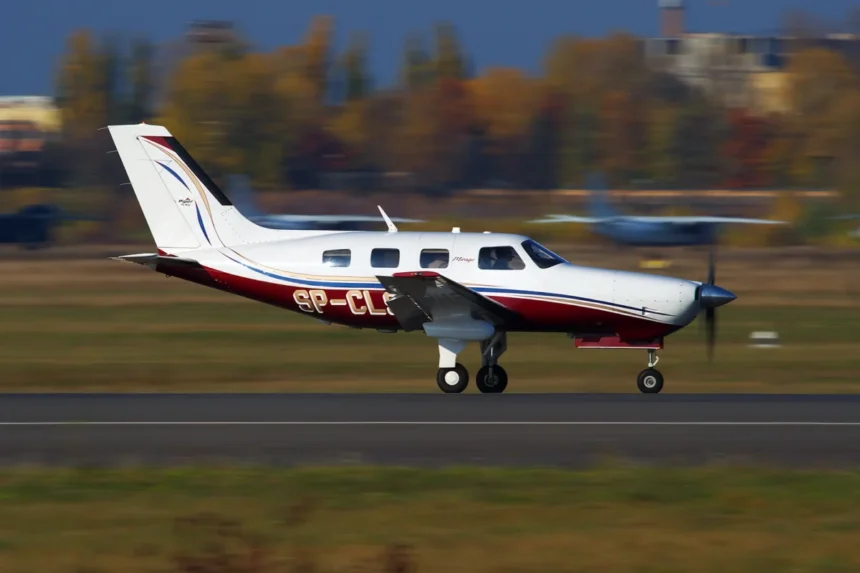
Thumbnail: archive/context photograph. Piper PA-46-350P Malibu Mirage SP-CLS at Kyiv Zhulyany, Ukraine, October 26, 2009; not the aircraft involved in the Wisconsin accident. Photo: Oleg V. Belyakov – AirTeamImages. Wikimedia Commons source and licence record; original gallery. Licensed under CC BY-SA 3.0 Unported. The Commons version has a 12-pixel bottom-edge crop recorded in its file history; this version was resized and compressed to WebP. Adaptations of this photograph remain available under the same licence; retain attribution, source and licence links and indicate changes. No endorsement is implied.
Photo: Piper PA-46-350P Malibu Mirage AN1754758 —
Oleg V. Belyakov – AirTeamImages · Wikimedia Commons · CC BY-SA 3.0. Resized and compressed to WebP; retained original licence.