




Libya’s transport minister says earlier ICAO warnings about Libyan airspace have been withdrawn, marking a change in the country’s effort to rebuild international aviation links. The October 26 announcement should not be read as confirmation that every foreign restriction has ended: EASA still lists an active warning, and the FAA maintains separate restrictions.
What Libya has announced
In an October 26 report by the Libyan News Agency, Government of National Unity Transport Minister Mohammed al-Shahoubi said the International Civil Aviation Organization had cancelled earlier airspace safety warnings issued in 2013 and 2015.
The minister presented the decision as progress toward restoring international confidence and said his ministry planned to promote the airspace to airlines. Crucially, the same report says work will continue to meet requirements for lifting remaining restrictions on Libyan airlines. Those remaining measures are distinct from the warnings addressed in his announcement.
This account is attributed to the minister through Libya’s state news agency. Flyzeu has not independently obtained the underlying ICAO decision document.
EASA’s warning remains active
Checked after the Libyan announcement, EASA’s Libya Conflict Zone Information Bulletin remained marked Active. Bulletin CZIB-2017-02R20 covers the Tripoli flight information region at all altitudes and lists validity through January 31, 2027, unless reviewed earlier.
Its applicability includes EASA operators and authorised third-country operators flying under their EASA authorisation to or from the European Union. This is a separate assessment, rather than a universal statement about every airline or every flight.
The FAA also has a separate framework
The FAA’s current restrictions page continues to list its Libya Special Federal Aviation Regulation 112 and a Libya security notice. A statement about ICAO warnings does not, by itself, establish a change to those U.S. measures.
What passengers should check
- Confirm that your airline is actually selling and operating the specific route you need, with the correct departure airport and dates.
- Check current government travel advice and entry requirements separately from aviation announcements.
- Keep a flexible onward plan and check the carrier’s latest messages before leaving for the airport.
The development is significant for Libya’s aviation policy, but no new route, operating permit or guaranteed flight resumption follows automatically from this report. See our Libya aviation coverage for related reporting.
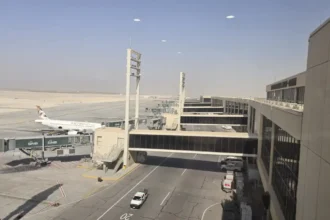
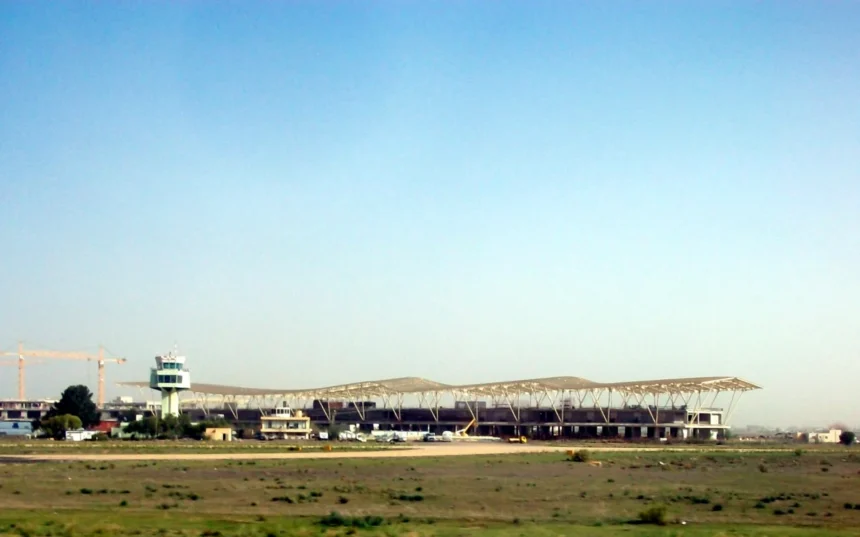
Archive/context photograph: the unfinished terminal project at Tripoli International Airport on March 7, 2013. Photo: Abdul-Jawad Elhusuni (عبدالجواد الحسوني) via Wikimedia Commons, CC BY-SA 3.0. Resized and compressed to WebP; any JPEG social derivative retains the same licence. This historical image does not show current airport conditions, a reopening or the October 2026 announcement.
Photo: Tripoli International Airport Terminal Construction — Abdul-Jawad Elhusuni (عبدالجواد الحسوني) · Wikimedia Commons · CC BY-SA 3.0. Resized and compressed to WebP; retained original licence.