




Avelo Airlines is adding a portable Lithium Fire Suppression System (LFSS) to its onboard emergency-response equipment, aimed at helping crews respond to overheating or burning lithium-ion batteries.
Announced on October 23, 2026, it supplements the airline’s existing fire response and training.
What Avelo says the LFSS adds
In its official announcement, Avelo says it is the first U.S. airline to use this particular device aboard its aircraft. That is the airline’s claim, not a statement that other carriers lack battery-fire equipment.
Michael Quiello, Avelo’s head of safety, security and operational excellence, said the portable system uses a dry agent and requires no permanent aircraft modifications. The airline says the design reduces the need for crew to handle an unstable device.
The release specifies no fleetwide completion date or individual equipped aircraft. Its performance descriptions come from the airline and supplier, not independent testing by Flyzeu.
Power-bank rules still matter
The additional equipment does not change what passengers should pack. The FAA’s current PackSafe guidance says spare lithium batteries, including power banks, belong in cabin baggage, with terminals protected against short circuits.
- If your cabin bag is gate-checked: remove power banks and spare lithium batteries and keep them in the cabin.
- Check the rating: the FAA’s normal lithium-ion limit is 100 watt-hours per battery. Larger permitted batteries require airline approval; individual carriers may impose stricter limits.
- Check the condition: damaged or recalled batteries that could produce dangerous heat or sparks are restricted. Check the airline and manufacturer before traveling.
- Report warning signs immediately: tell cabin crew if a battery or device becomes unusually hot, expands, smokes or burns.
Thermal runaway is an overheating process that can occur after damage, improper packing or other faults. Keeping spare batteries accessible helps trained crews identify and respond to a problem; passengers should follow crew instructions.
For Avelo network coverage, see our separate report on the airline’s planned McKinney–Florida routes.
Sources and photo context
This report uses Avelo’s dated equipment announcement and the FAA’s passenger guidance linked above. It does not report a battery-fire incident on an Avelo flight.
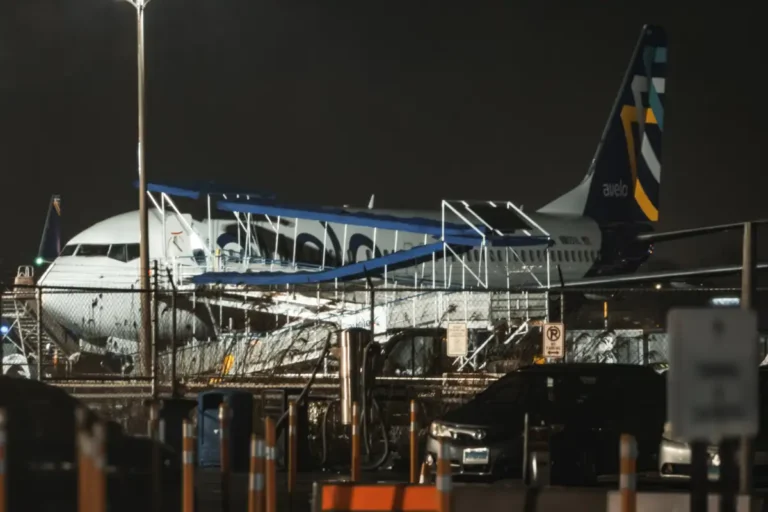
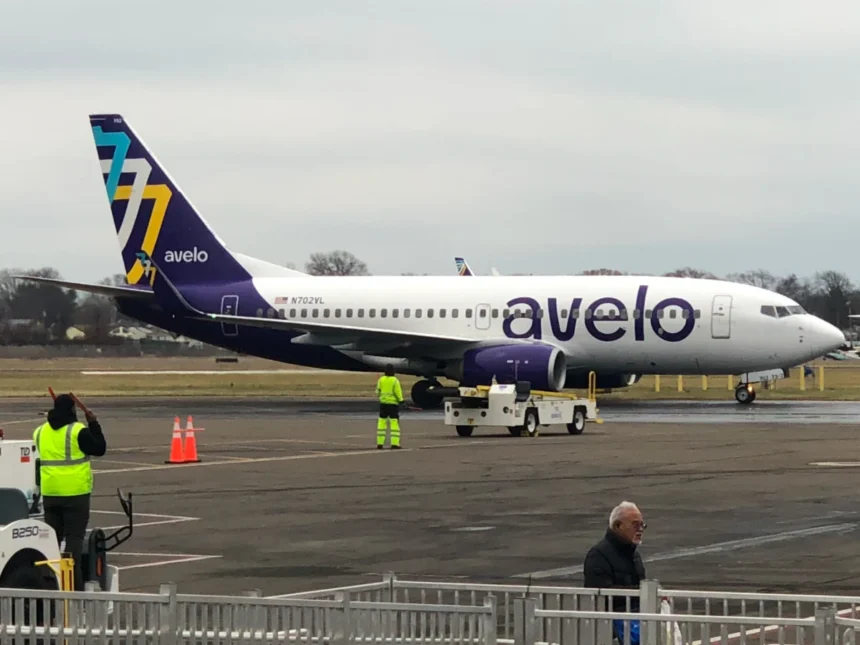
Archive/context photo: Avelo Boeing 737-700 N702VL at Tweed New Haven Airport, January 6, 2024. It does not show the LFSS or establish installation on this aircraft. Photo: Tim/Flickr via Wikimedia Commons, CC0 1.0. Resized/compressed to WebP; JPEG derivative may be used for social sharing.