




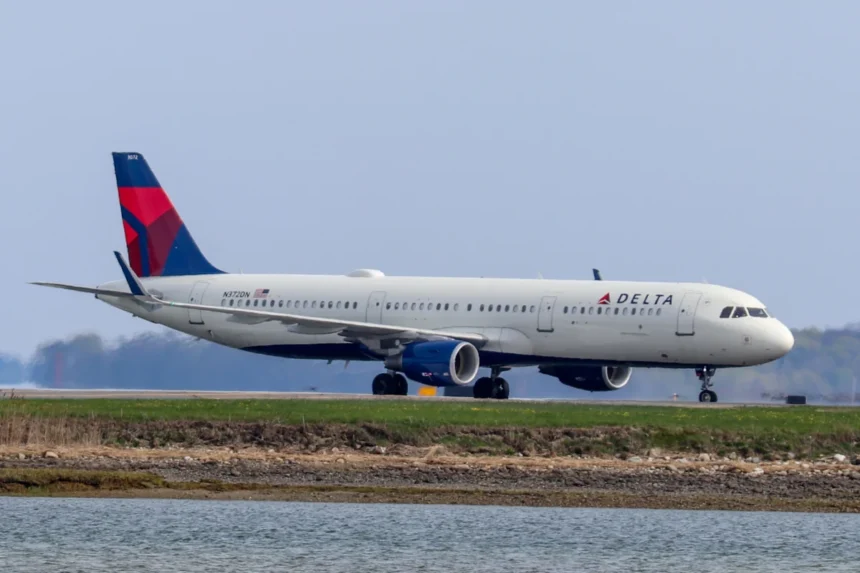
Boston Logan International Airport has received more than one million gallons of blended sustainable aviation fuel in a delivery coordinated by Delta Air Lines and Shell Aviation, Massport announced on October 29.
The airport operator described it as the first barge delivery of SAF to Massachusetts. It said the shipment arrived during the week and had entered Logan’s shared fuel supply, which serves the airlines operating at the airport.
One million gallons of blend, not pure SAF
The distinction matters: Massport’s volume refers to blended fuel. Its official announcement does not specify the SAF percentage in the blend or provide a shipment-specific calculation of emissions savings.
It therefore does not establish that one million gallons of conventional fuel have been replaced by one million gallons of pure SAF. Nor does entry into the common supply show that every Logan departure is using the same SAF proportion.
A supply-chain milestone
Massport says SAF can be blended with conventional jet fuel and used in existing aircraft and airport fueling infrastructure without major modifications. Delta and Shell coordinated this delivery; Massport marked the milestone alongside state officials and aviation stakeholders.
The announcement follows the introduction of a Massachusetts SAF tax credit, signed into law in June, which Massport says is intended to encourage adoption and help address the fuel’s higher cost. The release does not identify the shipment’s precise arrival day, disclose the blend ratio or set out a recurring delivery schedule.
Separate from Massport’s own net-zero target
Massport also points to its accelerated 2028 net-zero goal. It explicitly says that target covers its own operations. It should not be read as a promise that all airline flights using Boston Logan will have net-zero emissions by that date.
For travelers, the announcement concerns fuel supply rather than a new route, ticket product or timetable change. The useful measure to watch next is whether further deliveries expand the available supply—and whether the operator publishes the blend and emissions details needed to assess the scale of the benefit.